RV Refrigerator Repair Cost Review: 2026 Price Guide
Table of Contents
Last Updated: October 8, 2026
What an RV Refrigerator Repair Cost Review Actually Covers
An RV refrigerator repair cost review is a breakdown of what you'll actually pay to fix a cooling problem, a control board fault, or a failed heating element in your camper refrigerator, itemized by repair type rather than quoted as one vague number.
That distinction matters because refrigerator repair is rarely one job. It's a diagnosis, a service call, parts, and labor, and each line item behaves differently depending on whether you're dealing with an absorption refrigerator or a residential-style compressor unit.
Here's the honest problem with shopping this repair: pricing is scattered across forum posts and one-off estimates, and almost nobody publishes an itemized breakdown. So you end up comparing a number from a dealer to a number from a mobile tech to a number from a YouTube comment, and none of them are describing the same scope of work.
This guide fixes that. We'll walk through the cost components, the cooling-unit replacement question, and a decision framework for repair versus replacement. The National Highway Traffic Safety Administration recall lookup is also worth checking before you spend anything, since some refrigerator failures trace back to recalled components rather than wear.
Key Takeaway A repair quote is only useful if it tells you which components are included. "Fridge repair, $X" tells you nothing about whether the cooling unit, control board, or just the labor is covered.
RV Refrigerator Repair Cost: Itemized Breakdown by Repair Type
The total bill for an RV refrigerator repair is the sum of a service call fee, parts, and labor hours, and each of those three moves independently depending on the failure. Understanding the split is what lets you sanity-check any quote you receive.

Parts, Labor, and Service Call Fees
Parts pricing depends almost entirely on what failed. A thermistor, a heating element, or a door seal sits at the low end. A control board or a full cooling unit sits at the high end, often several times the cost of the simpler components combined. Labor is billed hourly, and the hours depend on access: a refrigerator buried behind cabinetry in a Class A coach takes longer to reach than one with a clear exterior access panel.
The service call fee is the line item people resent most, and it's also the most predictable. A mobile provider charges for the trip to your campsite, storage lot, or driveway. That fee typically covers travel and the initial diagnosis, and it's usually credited or folded into the repair if you proceed.
Ask any provider to separate these three before you approve work. A quote that lumps them together is a quote you can't compare.
How Repair Time Affects Your Bill
Time is the variable you control least and should ask about most. A straightforward thermistor swap might take under an hour once the tech is on site. Diagnosing an intermittent cooling problem, the kind that works fine in the morning and fails by afternoon, can take considerably longer because the technician has to reproduce the fault.
A common mistake owners make is approving open-ended diagnostic time without a cap. Ask for an estimate of hours before work begins, and ask what happens if the diagnosis takes longer than expected. Reputable shops will tell you.
Watch Out Approving diagnostic work with no time limit is how a modest repair turns into a large bill. Always ask for an hourly estimate and a check-in point before the technician proceeds past it.
RV Refrigerator Cooling Unit Replacement Cost
Cooling-unit replacement is the single most expensive common repair on an absorption refrigerator, and it's the one where repair-versus-replace decisions actually get made. The cooling unit is the sealed assembly that does the actual refrigeration work, and when it fails, the refrigerator stops cooling entirely regardless of how well everything else functions.
Your RV Specialists
You have three paths here, and they differ mainly in cost and reliability:
New cooling unit: highest parts cost, factory-fresh components, longest expected service life.
Rebuilt cooling unit: lower parts cost, quality depends heavily on the rebuilder, variable lifespan.
Used unit from a salvage RV: cheapest parts cost, unknown remaining life, and a real risk of repeating the failure.
Labor for a cooling-unit replacement is substantial because the refrigerator usually has to come out of its cabinet. That's true whether you're in a travel trailer or a diesel pusher, though access varies. On an older motorhome with tight cabinetry, expect the labor share of the bill to be proportionally larger.
The rebuilt route is where owners get burned most often. A rebuilt cooling unit can be an excellent value, but only from a rebuilder with a real warranty and a track record. If the price seems too good, ask what warranty backs it and get the answer in writing.
RV Refrigerator Replacement Cost: When a New Unit Makes More Sense
Replacing the entire refrigerator becomes the smarter financial call when the repair cost approaches a large share of a new unit's price, or when the existing unit is old enough that a second failure is likely soon after the first. There's no universal threshold, but the logic is straightforward: if you're paying for a major repair on a refrigerator that's already near the end of its service life, you're buying time, not reliability.
Replacement also opens a decision that repair doesn't: absorption versus residential. A residential-style compressor refrigerator cools faster and handles hot ambient temperatures better, which matters if you camp in the South in summer. The trade-off is that it draws more power, so it fits some rigs and power setups far better than others.
Before you commit to replacement, price out both the unit and the installation labor. Installation isn't trivial, and a unit that doesn't fit the existing cabinet opening can turn a straightforward swap into a carpentry project.
Option | Relative Parts Cost | Labor Intensity | Best For |
Component repair | Low | Low to moderate | Recent unit, single failed part |
Rebuilt cooling unit | Moderate | High | Older unit, budget-conscious owner |
New cooling unit | High | High | Keeping a sound cabinet and shell |
Full replacement | Highest | Moderate to high | End-of-life unit, upgrading to residential |
RV Refrigerator Repair vs Replacement: A Decision Framework
Use this framework to decide between repair and replacement without guessing. It weighs the same factors a technician does: age, condition, and the out-of-pocket math.
Age, Condition, and Out-of-Pocket Math
Start with age. Refrigerators in the middle of their service life are usually worth repairing, because the rest of the unit still has years left. Units near the end are usually not, because you're funding a repair on borrowed time.
Then assess condition beyond the current fault. Is the cabinet sound? Are the door seals still tight? Has the unit been repaired before? A refrigerator that's on its third problem in two years is telling you something.
Finally, run the math:
Estimate the full repair cost, parts plus labor plus service call.
Estimate the replacement cost, unit plus installation.
Divide repair cost by replacement cost.
If repair is a small fraction of replacement and the unit is mid-life, repair.
If repair is a large fraction of replacement, or the unit is near end-of-life, replace.
If the unit has failed repeatedly, weight the decision toward replacement regardless of the math.
This is the same logic a shop uses, just written down. Running it yourself keeps you from approving a repair that doesn't make sense.
Pro Tip Ask the technician for the repair estimate and the replacement estimate in the same conversation. Having both numbers side by side makes the decision obvious far more often than owners expect.
RV Refrigerator Not Cooling Troubleshooting Before You Call
Some cooling problems are worth checking yourself before you pay a service call fee. RV refrigerator not cooling troubleshooting starts with the basics, and a few of them are genuinely owner-fixable.
Work through these in order:
Confirm it's actually running. Check that the unit has power and that the mode selector is set correctly for propane or electric operation.
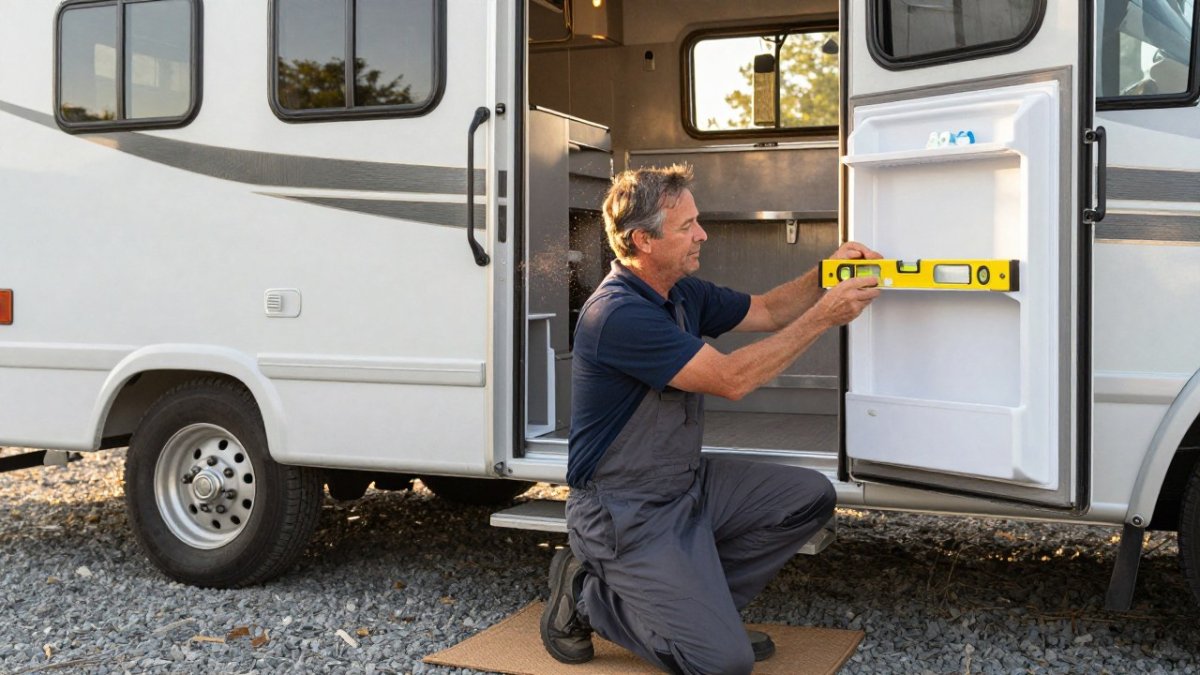
Check the level. Absorption refrigerators are sensitive to being off-level. If you've been parked on a slope, level the rig and give it time.
Look at the vents. Blocked or dirty exterior vents reduce airflow and cooling performance. Clear them.
Feel the back for heat. An absorption unit that's running should be producing heat at the back. No heat usually points to a heating element or control issue.
Check the door seal. A failed seal lets cold air escape and makes a working refrigerator look broken.
If you've done all five and it's still not cooling, stop. Continuing to troubleshoot beyond this point risks damaging components and costs you more than the diagnosis would have.
Watch Out If you smell ammonia near the refrigerator, stop using it immediately and disconnect power. That odor indicates a breached cooling system, and running the unit can be a safety hazard. This is a call-a-professional situation, not a DIY one.
Mobile Service Costs, Regional Differences, and Warranty Coverage
Mobile service pricing varies more than shop pricing because you're paying for travel, and travel costs differ by region and by how far the technician has to go.
Regional differences also show up in labor rates. Markets with a higher cost of living generally carry higher hourly rates, and that flows straight into your bill.
Warranty coverage is the part owners ask about least and should ask about most. Before approving any repair, get clear answers to three questions:
What's covered if the same problem returns?
How long does the coverage last?
Is the parts warranty separate from the labor warranty?
At Sharp RV Services, we handle mobile repairs across Pinellas County, coming to your campsite, storage lot, or driveway so you're not paying to tow a rig to a shop.
If you want to understand the manufacturer's side of warranty coverage, the Federal Trade Commission guidance on warranty rights explains what warranties must and must not do. It's worth a read before you assume a repair isn't covered.
One more consideration: if your refrigerator is still under a manufacturer's or extended service plan, check the terms before authorizing any third-party repair. Some plans require pre-approval, and skipping that step can void coverage.
RV refrigerator problems never arrive at a convenient time, and the cost uncertainty makes them worse.
Frequently Asked Questions
How much does it cost to repair an RV refrigerator?
The RV refrigerator repair cost depends on what failed. Minor fixes like a faulty thermostat or blocked burner are on the lower end, while a cooling unit replacement sits at the higher end because the part itself is expensive and the job takes hours. Labor typically runs by the hour, and mobile providers often add a service call fee. Because parts and labor vary by unit type and region, ask for an itemized estimate before work begins so there are no surprises.
Is it cheaper to repair or replace an RV refrigerator?
That depends on the unit's age and the repair needed. A single failed component on a refrigerator under eight years old usually favors repair. If the cooling unit has failed on an older absorption refrigerator, or if multiple systems are failing at once, replacement often costs less over the next few years. Compare the repair quote against the RV refrigerator replacement cost, then factor in how long you plan to keep the rig.
How long does an RV refrigerator repair usually take?
Simple repairs like a thermistor swap or burner cleaning can finish in under an hour. A cooling unit replacement is a bigger job that often takes several hours because the refrigerator usually has to come out of its cabinet. Mobile technicians may need a second visit if a part has to be ordered. Ask the provider for a time estimate up front so you can plan around the downtime.
What are the most common problems with RV refrigerators?
The most frequent complaint is an RV refrigerator not cooling, which usually traces back to a blocked burner, a failed thermistor, poor ventilation, or a leaking cooling unit. Leveling issues and low propane pressure also cause performance problems in absorption models. Before calling a technician, confirm the unit is level, the vents are clear, and it has had several hours to cool. If it still will not cool, a professional diagnosis is the next step.
Comments