How to Get Back on the Road With Mobile RV Repair
Quick Summary
Mobile RV repair brings a technician to your campsite or storage lot, so many breakdowns get fixed in a single visit without towing. Start by triaging the symptom, then choose mobile repair for AC, water, appliance, leak or power problems and a shop only for major structural or chassis work.
Note what changed, when it started, and anything you did just before the problem appeared.
Stop running any system that smells of burning, arcs, or grinds, and do not reset a breaker that trips repeatedly.
Ask providers for the call-out fee, labor minimum, parts markup and after-hours premium.
Confirm the repair warranty terms and whether your RV warranty requires an authorized service center before booking.
Have the make, model, year, VIN and photos of the problem ready to speed up the technician's visit.
Stuck with an RV breakdown?
Sharp RV Services brings AC, water and appliance repairs to your campsite in Pinellas County.
Table of Contents
Triage a Breakdown Before You Call Anyone
When an RV stops working on a trip, first figure out what failed and how urgent it is. A quick triage before you call can help you tell whether you have a simple fix or need a technician right away.

Note what changed: did the AC stop cooling, the water pump quit, the power go out, or a new leak appear?
A Quick Checklist for AC, Water, Power and Leaks
Use this checklist to sort the problem before you call:
AC not cooling: Check that the thermostat is set to cool and the fan is on. Confirm the breaker is not tripped. Look for a dirty air filter.
No water or weak flow: Confirm the water pump switch is on and the tank has water. Check the fresh water hose connection at the campsite.
Power problems: Check the shore power cord, the campground pedestal, and the breaker panel. Reset any tripped breakers one at a time.
If a breaker trips again after one reset, stop. A repeated trip usually points to a wiring or appliance fault, and running the system again can cause more damage.
Watch out: Do not work on a live electrical panel or try to open a propane appliance yourself.
Write down the symptom, the time, what you already checked, and the RV make and model. That record helps the technician start faster and can save on diagnostic time.
Mobile RV Plumbing Repair: What Can Be Fixed On Site
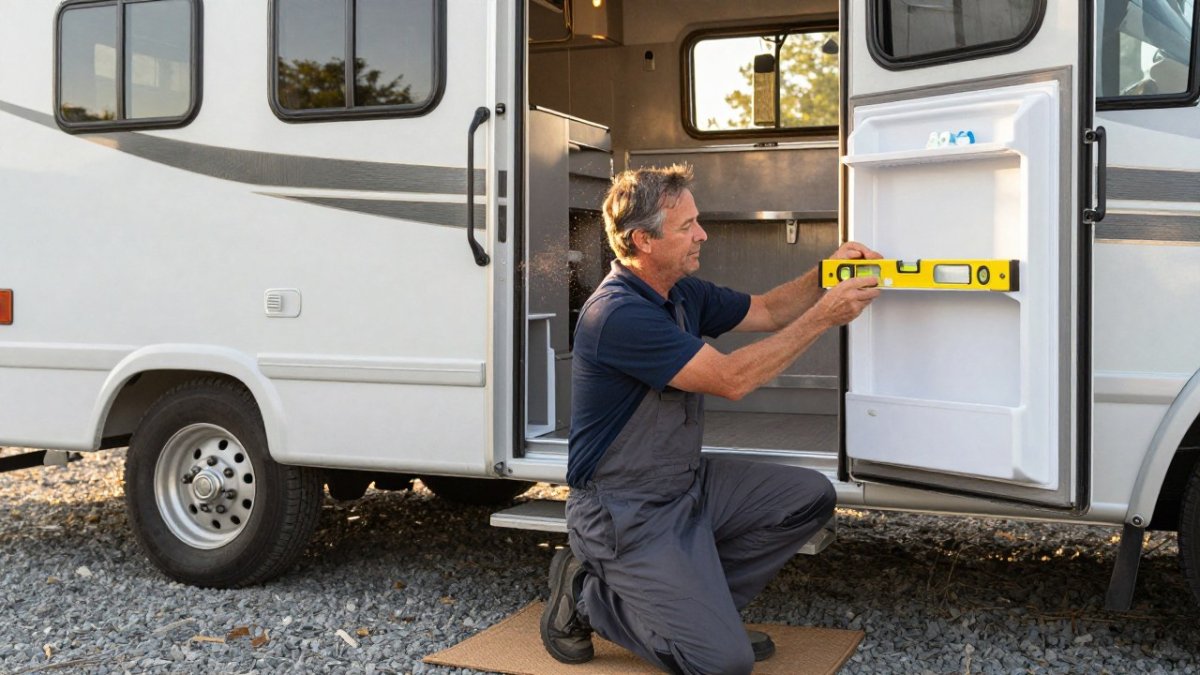
Many plumbing problems can be handled at your campsite or storage lot.
Common on-site plumbing repairs can include leaking fittings, faulty water pumps, pressure problems and drain blockages, depending on the RV and the problem.
Some plumbing work may need a shop, such as major water heater replacements or failures inside the walls. To see whether we offer on-site repair for your specific issue, browse our plumbing repair services.
Access drives plumbing cost. A leak behind a cabinet is easy to reach; one hidden inside a wall takes longer and costs more.
Finding a Mobile RV Repair Near Me in Pinellas County
Searching for a mobile rv repair near me is the fastest way to find help, but results can be mixed.
Good places to start include online reviews that mention recent visits, your RV manufacturer's support network, and owner groups for your RV make and model.
When you call, ask whether the provider covers your location, what hours they keep, and whether they handle your type of RV.
Vetting a Technician Before You Authorize Work
Before you authorize repairs, consider asking for the technician's name, how long they have worked on RVs, and whether they carry liability insurance.
When comparing providers, ask for a written estimate listing labor and parts separately, what the call-out fee covers, and whether it is credited toward the repair.
Be cautious with anyone who wants to start work without a written estimate, asks for full payment upfront, or pressures you to decide right away.
24-Hour Mobile RV Repair and Emergency Options
Breakdowns do not wait for business hours, and the right call at 2 a.m. differs from the right call at 2 p.m. Run a fast safety triage first so you know which help you need.
First, make the situation safe
Fire or smoke: Evacuate everyone, move well away from the RV, and call 911. Do not re-enter to grab belongings.
Propane smell: Shut off the propane at the tank valve if you can reach it safely, extinguish open flames, do not flip light switches, and get everyone outside. Call 911 or the fire department's non-emergency line, then the propane supplier.
Electrical burning smell or arcing: Turn off the shore power at the pedestal breaker, unplug the cord, and do not reset the breaker again. Treat it as a fire risk until a technician inspects it.
If none of those apply, you likely have a livability problem, no AC, no water, a dead outlet, a slow drain, and a mobile technician is usually the right call during business hours.
Match the problem to the right resource
Mobile RV technician: Best for AC, water, plumbing, appliance, 12-volt, and shore-power problems at a campsite or storage lot. Some providers offer same-day or after-hours appointments; ask when you book.
Roadside assistance plan: Best for towing, tire changes, jump-starts, lockouts, and fuel delivery. Confirm whether your plan covers RVs specifically and what weight or length limits apply, because many auto-club plans exclude larger motorhomes unless you add RV coverage.
Campground maintenance staff: Useful for pedestal power problems, water spigot issues, and site access questions. They cannot work on your RV, but they can confirm whether the problem is on their side of the hookup.
What after-hours service actually costs
After-hours and emergency visits may carry a higher call-out fee, and some providers bill a minimum labor block even if the repair takes less. Ask three questions before authorizing: What is the after-hours call-out fee?
Watch out: If a provider quotes an after-hours rate but cannot tell you the call-out fee, labor minimum, or whether parts are extra before dispatching, that is a sign to call the next provider on your list.
Prepare before the technician arrives
A few minutes of preparation shortens the visit and lowers the bill. Have the RV's make, model, year, and VIN ready, plus the exact symptoms, when they started, and what you already checked. Photograph the problem area and the campsite layout, gate width, overhead branches, soft ground, and distance from pad to RV all affect access. Confirm the site has working power and water, and whether pets or vehicles need moving.
Mobile RV Repair vs. Shop Repair: How to Decide
Mobile and shop repair each have clear strengths. The right choice depends on the problem, your time, and your travel plans.
Choose mobile repair when:
You are staying at a campsite or storage lot
The problem is with AC, water, appliances, leaks, or power
You want to avoid towing and lost travel days
Choose a shop when:
The repair needs a lift, specialized tools, or major structural work
The problem involves the chassis, engine, or transmission
The technician says the job is too large for an on-site visit
Shop repair can take days or weeks depending on parts and scheduling. Mobile repair often finishes in a single visit, which is why many owners choose it for routine fixes.
Costs, Warranties and Documentation to Ask About
Mobile RV repair pricing is not standardized across providers, so quotes for the same job can differ. Understanding how a quote is built lets you compare providers fairly.
How a mobile repair quote is usually built
Mobile providers commonly price a job from pieces such as:
Call-out or trip fee: A charge for bringing the technician to your location. Ask whether it is credited toward the repair.
Labor: Ask how labor is billed and whether there is a minimum.
Parts: Ask whether parts are billed at cost or with a markup, and whether you can supply your own.
Ask whether after-hours, weekend, or holiday visits carry a premium on top of the standard call-out fee, and make sure any such charges are disclosed up front.
Questions that make quotes comparable
Ask every provider the same set of questions so you can line up the answers side by side:
What is the call-out fee, and is it credited toward the repair?
What is the hourly labor rate, and is there a minimum?
Are parts billed at cost or with a markup?
A provider who answers these clearly and in writing is usually easier to work with than one who quotes a single number and resists breaking it down.
Watch out: Be cautious with any provider who wants full payment upfront, refuses to put an estimate in writing, or pressures you to authorize work before explaining the diagnosis. Those patterns are common warning signs.
Warranty terms to confirm before you pay
Ask what the repair warranty covers, how long it lasts, and whether it covers labor, parts, or both. Confirm which warranty applies to labor and which to parts. Also ask whether the warranty is voided if you or another shop touches the repair afterward, and how to file a claim if the problem returns. Get the terms on the invoice, not just in conversation.
Documentation for insurance and extended warranties
If you plan to file a claim, the paperwork matters as much as the repair. Before work begins, photograph the problem area from several angles and note the date, location, and symptoms. Afterward, keep the written estimate, final invoice, parts receipts, and warranty terms together. Ask the technician to note the cause of failure on the invoice, insurers and extended-warranty administrators often want a cause-of-loss statement, not just a description of the fix.
Check whether the repair affects your RV warranty
If your RV is still under a manufacturer or extended warranty, confirm before the visit whether the repair must be done by an authorized service center to keep coverage intact. Some warranties allow mobile repairs by qualified technicians; others require authorized facilities for certain systems.
Quotes for the same job can differ, so it helps to compare providers on the same pieces of the bill.
Quote item | What to ask | Why it matters |
Call-out or trip fee | Is it credited toward the repair? | Changes the real cost of a small job |
Labor | Hourly rate and any minimum | Minimum blocks can exceed the actual work |
Parts | Billed at cost or with a markup? | Markups vary between providers |
Diagnostic fee | Separate from the repair? | Avoids paying twice for the same visit |
Travel or mileage | Charged beyond a set radius? | Can add cost outside the service area |
After-hours visits | Any premium on top of call-out? | Emergency rates can be much higher |
Written estimate | Provided before work, with a call before exceeding it? | Protects you from surprise charges |
Booking Your Mobile Visit With Sharp RV Services
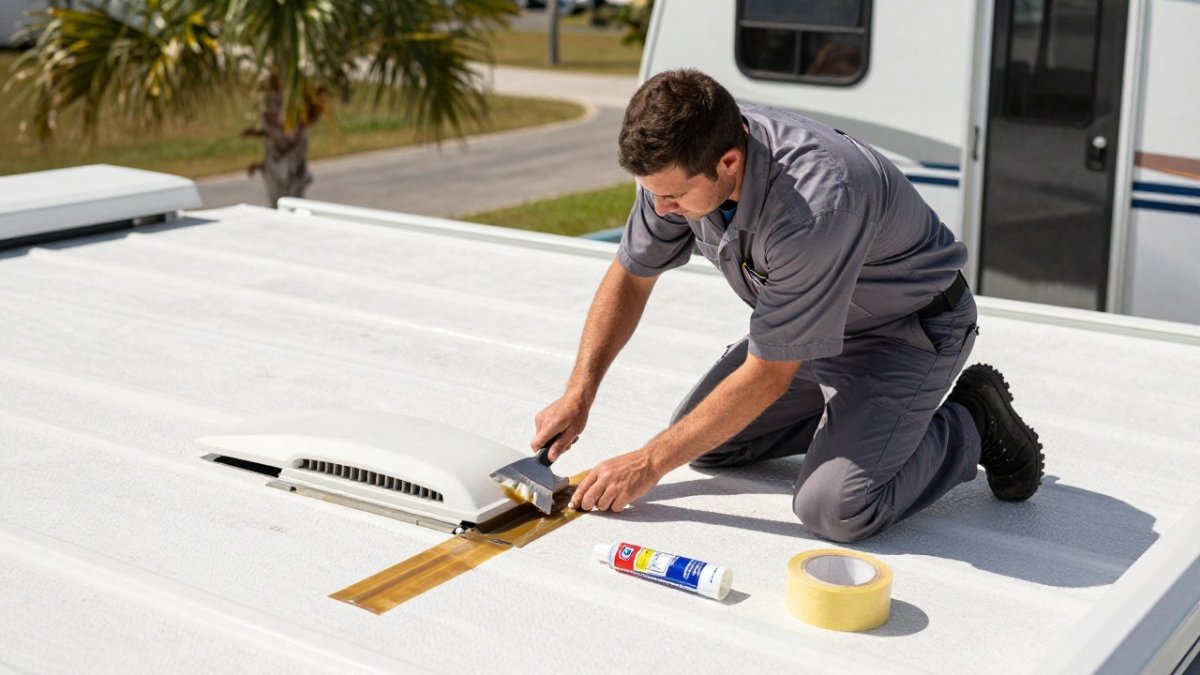
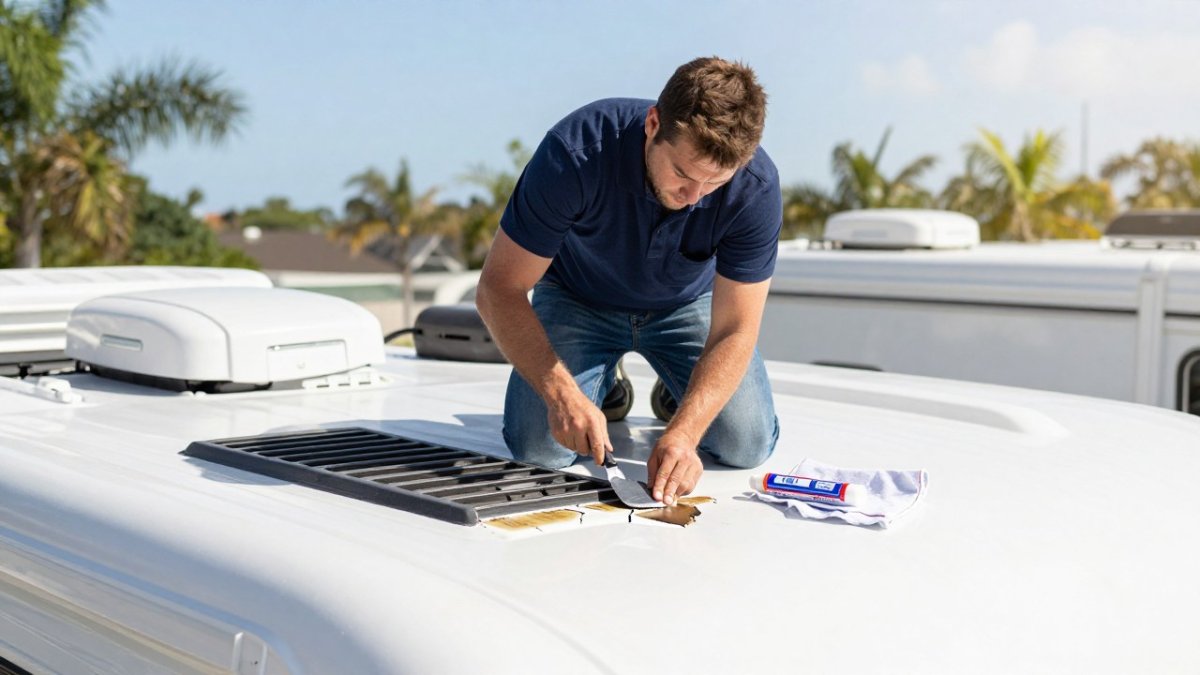
Sharp RV Services provides mobile repair and maintenance for RVs throughout Pinellas County, including AC and water systems, appliances, leaks, and exterior cleaning.
To book, contact us through our website with your RV make and model, a description of the problem, and your location in Pinellas County.
Get in touch with Sharp RV Services today to schedule your mobile visit. You can contact us directly to book a time that works for your location.
Frequently Asked Questions
How do I find a reliable mobile RV repair service?
Start by confirming the provider services your RV type and the specific system that failed, such as AC, plumbing or electrical. Ask whether they carry common parts, how they handle call-out fees, and whether they will give a written estimate before starting work. Check recent customer reviews for mentions of punctuality, since missed appointments are a common complaint. Request proof of insurance and ask what their repair warranty covers. A provider that answers these questions directly and in writing is usually easier to trust.
Can a mobile RV plumbing repair be done on site?
Many plumbing issues can be handled at your campsite or storage lot, including leaking fittings, faulty water pumps, pressure problems and drain blockages. Repairs that require removing major components, replacing a water heater or working on tanks that cannot be accessed safely may require a shop. Ask the technician to confirm during the first call whether your specific leak or pump problem can be fixed on site, and whether any parts will need to be ordered first.
Is 24-hour mobile RV repair available for urgent breakdowns?
Some providers offer after-hours or emergency service, but availability varies widely and often depends on the nature of the problem and the technician's schedule. Ask whether after-hours calls carry a higher call-out fee and whether same-day response is guaranteed or only attempted. For a non-emergency issue, booking during regular hours is usually faster and cheaper. For current availability and rates, check the Sharp RV Services website.
When is mobile RV repair better than taking the RV to a shop?
Mobile repair is usually the better choice when the problem is contained, such as an AC unit, a leak, a water pump or an appliance, and when your RV is already parked at a site or storage lot. It saves towing costs and lost days on the road. A shop is more appropriate for major engine or chassis work, structural damage or repairs that need a lift, specialized equipment or a full bay. Ask the mobile technician early whether your problem falls within what they can handle on site.
Comments