How Do You Find Mobile Camper Repairs Near Me?
Quick Summary
Mobile camper repairs are performed by a technician who comes to your rig wherever it is parked, instead of you towing it to a shop. To find a good one near you, search for providers in your area, then confirm their credentials, insurance, and written estimate before booking.
Mobile service covers AC, water systems, appliances, electrical problems, and leaks at your parked site.
Ask for a written estimate that separates diagnostic time, labor, parts, and travel charges.
Confirm the business carries general liability insurance and ask for a certificate of insurance.
Ask what warranty covers the repair, for how long, and whether it includes parts and labor.
Do not authorize work beyond the written estimate without an updated approval from you.
Table of Contents
Finding mobile camper repairs near me usually starts with a search, but the real work is knowing what to ask once you find a technician. This guide from Sharp RV Services walks through what mobile repair covers, what drives the price, and how to pick a technician who will actually show up and fix the problem.
Mobile RV repair means a technician comes to your rig, wherever it is parked, instead of you towing it to a shop. For RV owners in Pinellas County, that can mean a campsite, a storage lot or a driveway. Most people search for this kind of service when something has already broken, so speed and clear communication matter as much as technical skill.
What Mobile Camper Repair Covers
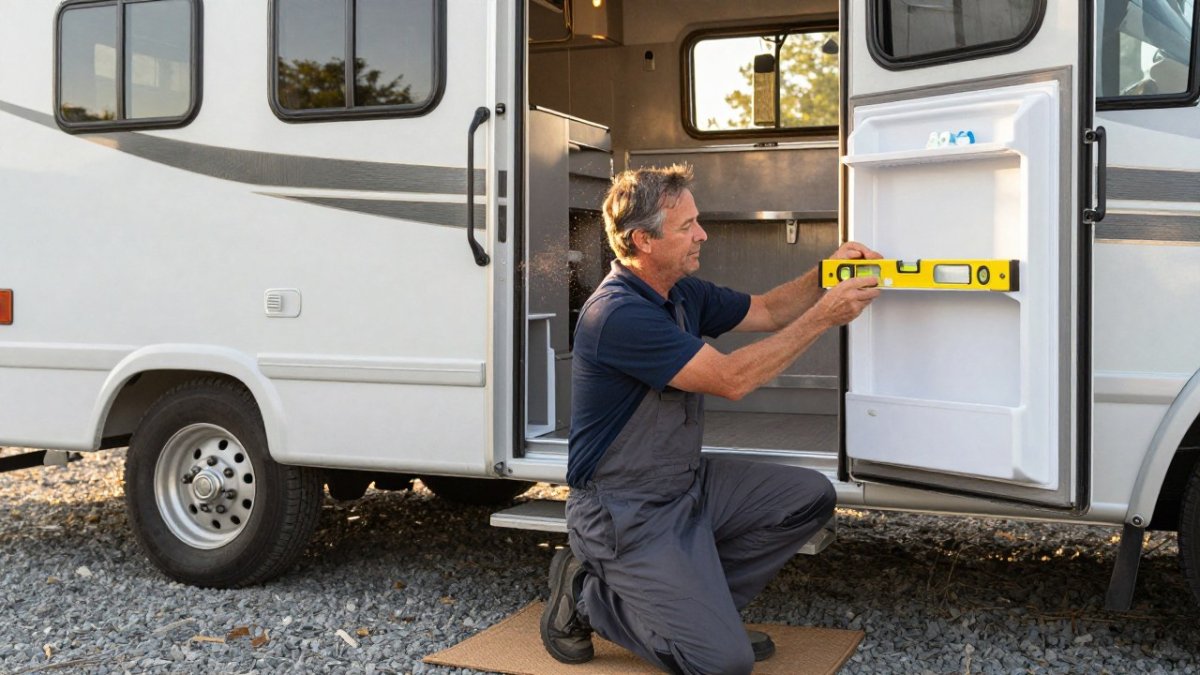
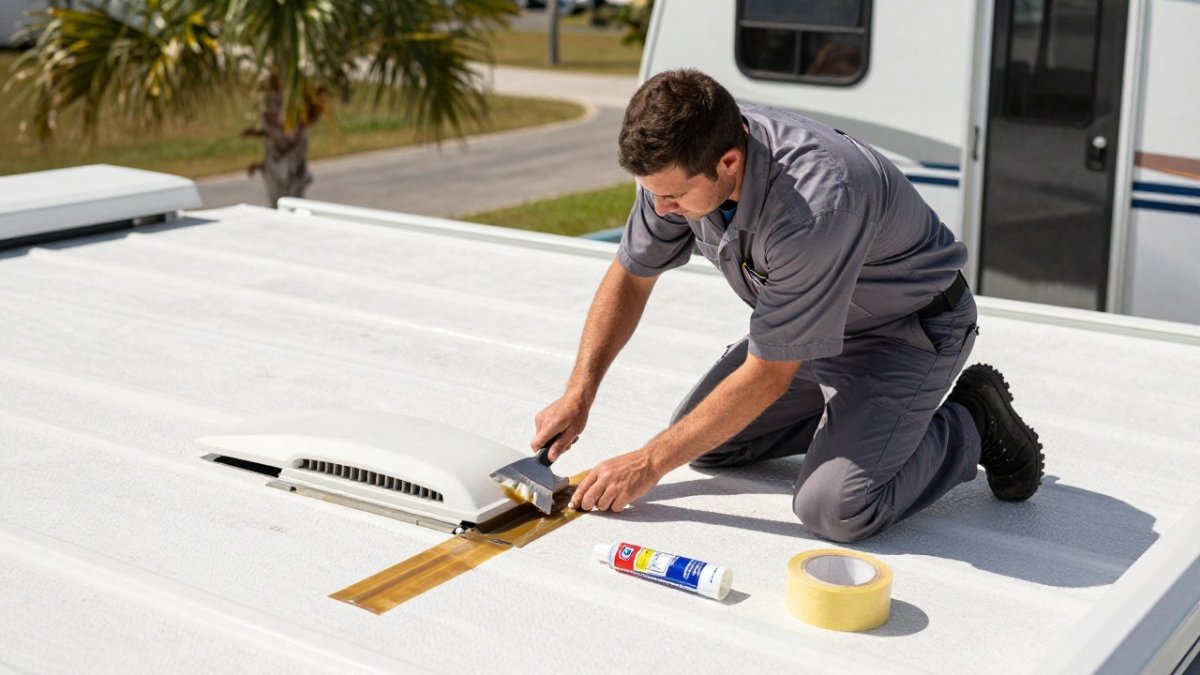
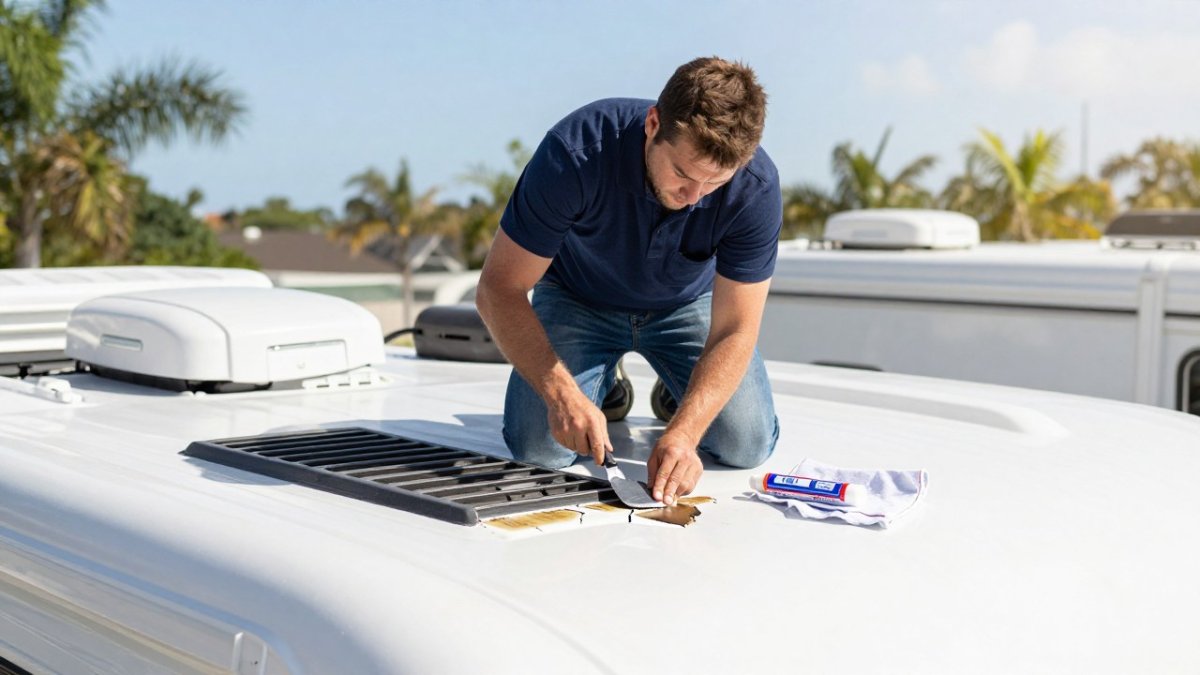
Mobile service typically handles the systems that give owners the most trouble: air conditioning, water systems, appliances, electrical problems, and leaks. Many visits also include exterior cleaning and general upkeep.
You can review the full list of repair services on our Services page.
Mobile Camper Repair Cost: What Affects the Price
Mobile camper repair pricing is not a single rate. It is built from several line items, and understanding them is the difference between a fair quote and an unpleasant surprise. Most mobile providers structure a bill from the same building blocks, even if the final number varies by rig and problem.
The main cost drivers are:
Diagnostic time. The technician has to reproduce the symptom, test the system, and identify the failed component. A no-cool AC call and an intermittent 12-volt electrical fault can take very different amounts of time to diagnose even though both are "one problem."
Labor hours. Repair labor is usually billed hourly, and the rate reflects the technician's experience and the market. Ask for the hourly rate before booking so you can sanity-check the estimate.
Parts and materials. Appliance control boards, AC capacitors, water pumps, plumbing fittings, sealant, and slide-out hardware all carry different costs. Parts availability matters too: a common item may be on the van, while a model-specific board may need to be ordered, adding a day or more.
Travel and service call. Mobile service includes driving to your site, and that time and fuel are usually recovered through a service call fee or a trip charge. Distance from the technician's base and site access both affect it.
Access and site conditions. A repair that requires roof access, moving a slide-out, or working in a tight storage bay takes longer than the same repair on an open pad. Tell the provider where the rig is parked and what access looks like.
After-hours or emergency premiums. Weekend, evening, and same-day emergency calls often carry a higher rate. If the problem can safely wait for a standard appointment, say so and ask for standard-rate scheduling.
A practical way to compare quotes is to ask each provider to break the estimate into diagnostic, labor, parts, and travel. A quote that is one lump sum is harder to evaluate than one that shows its parts. Ask specifically:
Is the diagnostic fee separate from the repair, and is it credited if I approve the work?
Is the service call fee included in the estimate or added at the end?
Is the labor estimate an hour range or a fixed number, and what happens if the job runs long?
Are parts quoted at list price or with a markup, and are special-order parts returnable?
Does the estimate cover testing the repair and a follow-up check?
Pro Tip Get the estimate in writing before the technician starts. A written estimate that lists labor, parts, and travel gives you a baseline to compare against the final invoice, and it is the single best protection against a bill that grows mid-job.
The article breaks mobile camper repair pricing into several line items, which are summarised below.
Cost driver | What it covers | Ask the provider |
Diagnostic time | Reproducing and identifying the fault | Is it credited if you approve the work? |
Labor hours | Hourly rate for the technician | What is the hourly rate? |
Parts and materials | Boards, capacitors, pumps, fittings, sealant | Is the price list or marked up? Are special orders returnable? |
Travel and service call | Driving to your site | Is it included or added later? |
Access and site conditions | Roof access, slide-outs, tight bays | Tell the provider where the rig is parked |
After-hours premiums | Weekend, evening or same-day calls | Can a standard-rate appointment be booked? |
RV Repair Service Call Fee: What to Ask Before Booking
Many mobile providers charge a service call fee to cover travel and the time spent getting to your location. Ask whether that fee is included in the quote or added later, and whether it is credited toward the repair if you proceed.
You can also reach out directly through our CONTACT US page to ask about current rates before you book.
How to Vet a Mobile RV Technician Near You
Choosing a mobile technician is a hiring decision, and it deserves the same scrutiny you would give any contractor working on your rig. The goal is to separate a professional mobile business from someone with a van and a toolbox. Use the checklist below before you book.
Credentials and experience
Ask what training or certification the technician holds. RV systems training, appliance manufacturer certifications, and electrical or propane credentials are meaningful signals. Certification requirements vary, so ask what applies to the work you need.
Ask how long the business has been operating and whether mobile repair is its primary work or a side service.
Ask whether the technician has worked on your RV type before, especially if you own a fifth wheel, a Class C, or a rig with a specific appliance brand.
Insurance and licensing
Confirm the business carries general liability insurance and ask for a certificate of insurance. This matters most for roof work, slide-outs, and anything that could damage your rig or a campsite.
Ask whether the technician is covered for mobile work at your location, since some policies exclude off-site jobs.
Confirm the business can provide a written invoice with a business name and contact information.
Estimates and warranty
Ask for a written estimate that separates diagnostic, labor, parts, and travel (Auto Repair Basics).
Ask what warranty covers the repair and for how long, and whether it covers both parts and labor.
Ask what happens if the repair does not fix the problem: is there a return visit charge, and is there a diagnostic re-check policy?
Reviews and track record
Read recent reviews for patterns, not single complaints. Look for mentions of punctuality, whether the final bill matched the estimate, and how the business handled a problem that was discovered mid-repair.
Ask for references from jobs similar to yours if the repair is significant.
Check that the phone number works and that someone answers or returns calls promptly. Slow communication before the job is a warning sign for communication during the job.
Red flags
A quote that is dramatically lower than others without a clear reason.
Reluctance to put an estimate in writing or to explain what is excluded.
No verifiable business name, insurance, or warranty terms.
Pressure to approve additional work on the spot without a written revision to the estimate.
Watch Out Do not authorize work beyond the written estimate without an updated approval. A technician who discovers a second problem should explain it, quote it, and get your sign-off before proceeding. That protects both sides and keeps the final bill predictable.
A technician who will walk through credentials, insurance, warranty, and scope in plain terms is usually the safer choice, even if the quote is not the lowest. The cheapest visit is the one that fixes the problem once.
Mobile Camper Repair Versus Shop Repair
Mobile repair saves you the trip, the lost days without your rig, and the hassle of coordinating a tow. It works especially well for air conditioning, appliance, and water system issues you can keep at your site.
Mobile RV AC Repair: Getting Cooling Back Fast
Air conditioning failures are one of the most common reasons owners search for urgent help. Describe the symptoms clearly when you call: whether the unit runs but does not cool, makes unusual noises, or trips the power. This helps the technician arrive prepared and can shorten the diagnostic time.
RV Repair Appointment Checklist: Preparing for Your Visit
Before the technician arrives, prepare a short list to make the visit efficient:

Write down every problem, including ones that seem minor
Note when each issue started and what triggers it
Clear access to the areas needing work, including the roof, storage bays, and utility hookups
Confirm your power and water hookups are available at your site
Have your RV make, model, and year ready
Having this information ready speeds up the diagnostic and reduces the chance of a second appointment.
Booking Sharp RV Services for Your Next Repair
Sharp RV Services provides mobile repair and maintenance for recreational vehicles throughout Pinellas County. We bring the work to you, from AC and water systems to appliances, leaks, and exterior cleaning, with transparent pricing and a focus on getting you back on the road. If your rig needs attention, get in touch and describe the problem so we can plan the visit.
Frequently Asked Questions
What does a mobile camper repair service fix?
A mobile camper repair service typically handles air conditioning, water system leaks and pump problems, refrigerator and other appliance issues, electrical faults, slide-out mechanisms, roof and seal leaks, and exterior cleaning such as power washing. Because the technician comes to your site, much of this work can be done in your driveway, storage lot, or campsite. Ask the provider which systems they cover before booking so you know whether your problem fits their scope.
How do I find a reliable mobile RV repair technician near me?
Start by searching for mobile RV repair providers that serve your county, then check whether they specialize in RVs rather than general handyman work. Look for clear service areas, a working phone number, and a website that lists the systems they repair. Ask whether the technician has experience with your RV make and model, and whether they give written estimates before starting. Sharp RV Services serves Pinellas County; contact the company to confirm coverage for your address and equipment.
How quickly can a mobile RV technician come out?
Response time depends on the provider's schedule, the time of year, and how urgent the problem is. Snowbirds and travelers with a broken AC or water system should ask directly about same-day or short-notice availability when they call. Routine maintenance and exterior cleaning are usually easier to schedule in advance. Confirm the appointment window and whether the provider sends a reminder, so you are not left waiting for a no-show.
What should I know about mobile camper repair cost before I call?
Pricing for mobile camper repair depends on the system involved, the parts needed, how long the job takes, and any travel or service call fee. Request a current quote directly from the company. Ask for a written estimate that lists labor, parts, and any service call fee, and confirm what would trigger additional charges before work begins.
Comments