How Do I Find a Mobile RV Appliance Repair Technician Near Me?
Last Updated: October 25, 2026
Quick Summary
Mobile RV appliance repair brings professional technician services directly to your RV's location, whether parked at a campsite, storage lot, or driveway. A qualified technician arrives with tools and parts to diagnose and fix appliance issues on-site, eliminating the need to transport your RV to a shop.
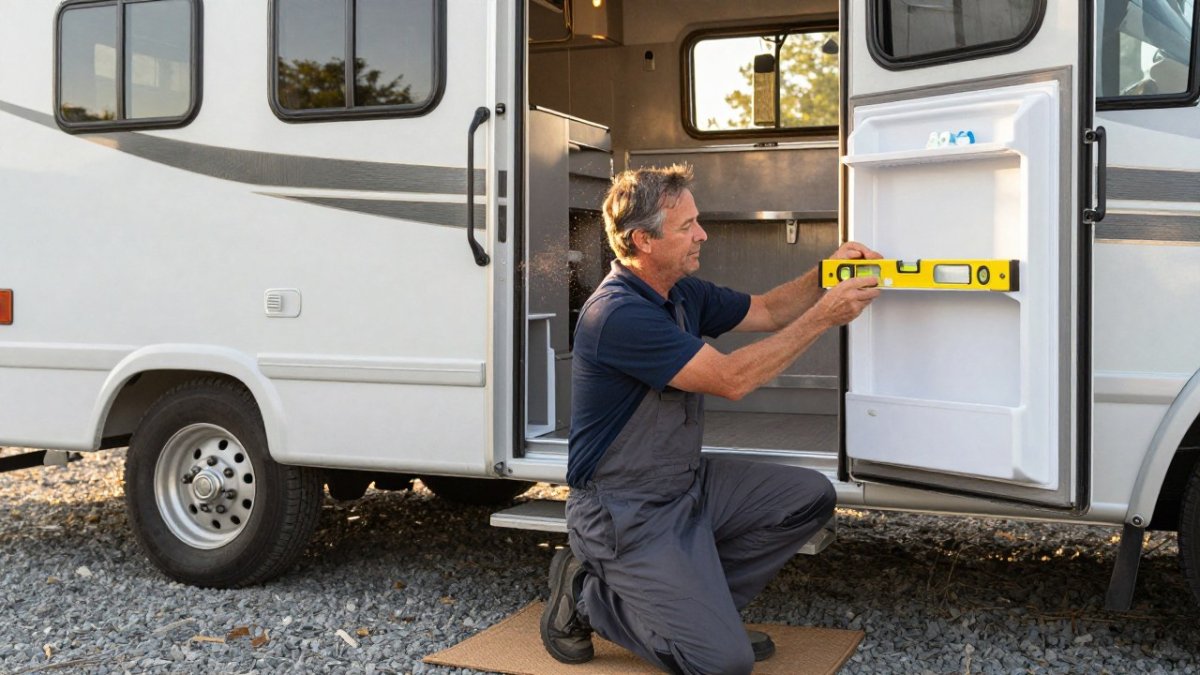
Check that your RV refrigerator is level, has clear vents, and receives adequate power before calling a technician.
Mobile technicians typically serve a defined geographic area, so confirm your location falls within their service territory.
Request written estimates and transparent pricing before authorizing any repair work.
Document all repairs with photos and receipts to maintain your RV's service history.
Qualified technicians hold relevant certifications, licenses, and insurance covering mobile service.
Table of Contents
Understanding Mobile RV Appliance Repair Services
Mobile RV appliance repair brings professional technician services directly to your location, eliminating the need to transport your recreational vehicle to a shop. Whether you're parked at a campsite, stored at a lot, or stationed in your driveway, a qualified technician arrives with tools and parts to diagnose and fix issues on-site.
At Sharp RV Services, we understand that RV owners need reliable solutions without the hassle of hauling their home on wheels to a distant service facility. Mobile service keeps you where you need to be while we handle the technical work.
The key difference between mobile repair and traditional shop service is flexibility and accessibility. A shop drop-off requires you to arrange transportation, wait for an appointment slot, and coordinate pickup.
RV Appliance Troubleshooting Before You Call
Before booking a mobile technician, run through basic troubleshooting steps. This helps you describe the problem accurately, narrows down the issue, and sometimes reveals a simple fix you can handle yourself.
Common RV Refrigerator Issues
RV refrigerators operate differently than household models. They use absorption cooling rather than compressors, which means they're sensitive to leveling, airflow, and power stability. Start by checking whether the unit is level, many RV fridge problems stem from a tilted RV.
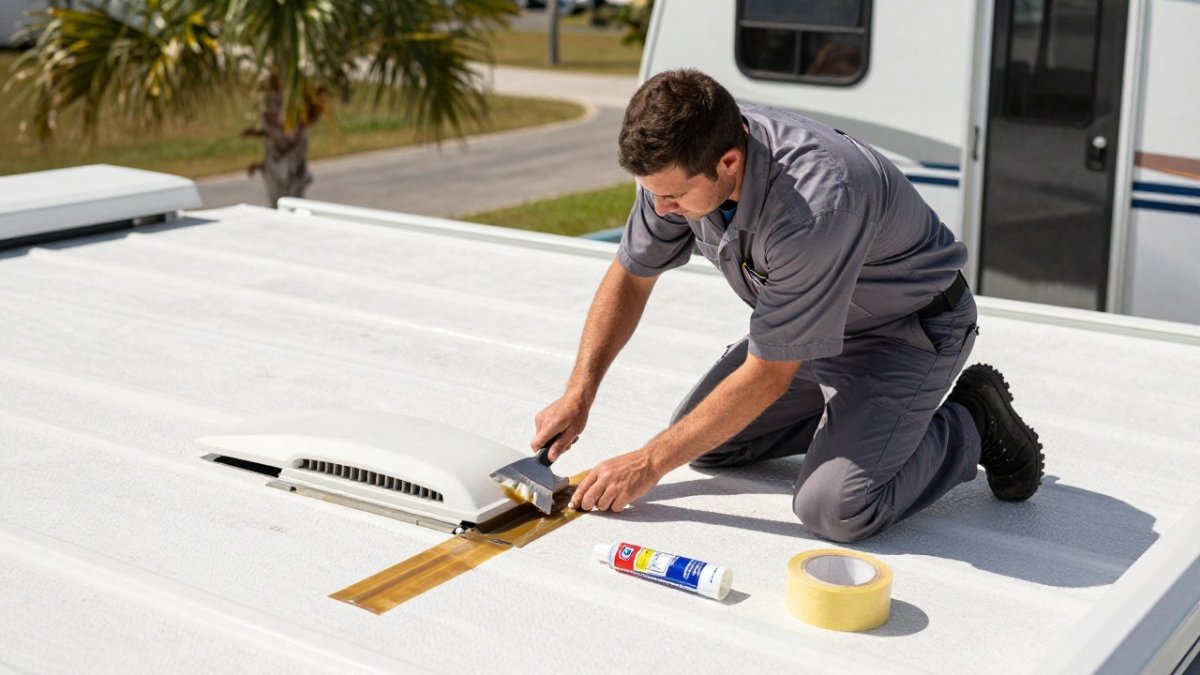
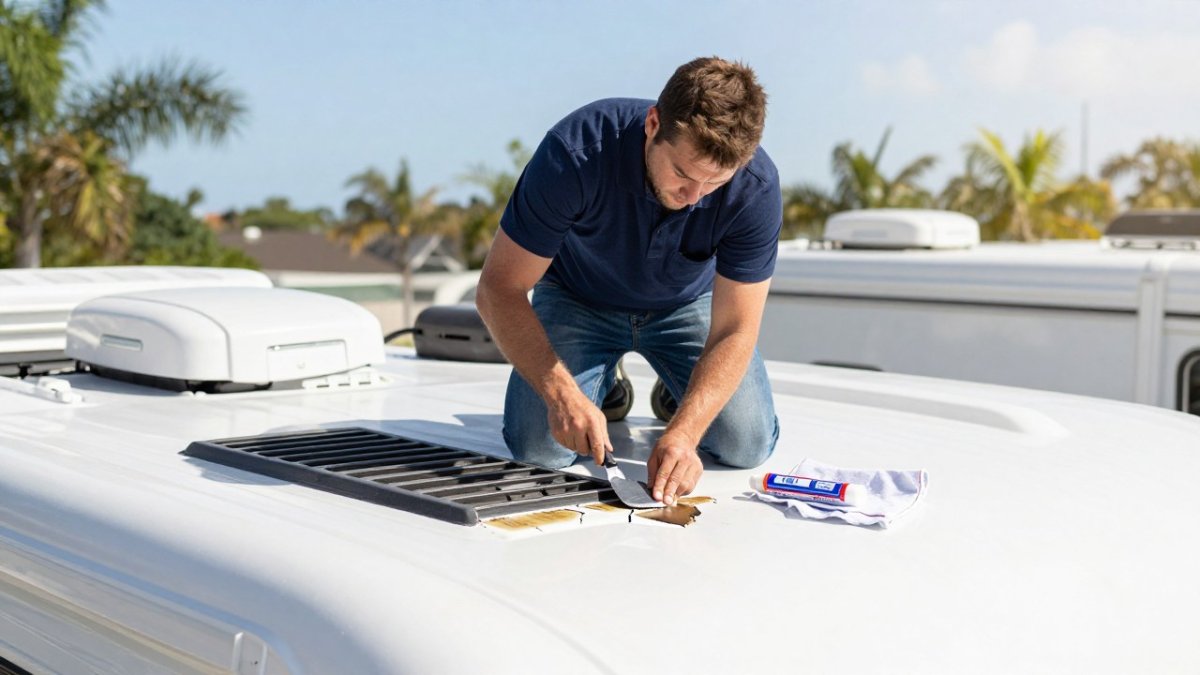
Next, check that the vent isn't blocked. RV refrigerators pull air through a roof vent to dissipate heat. Dust, debris, or insulation can clog this vent, causing the fridge to work harder and cool poorly. Look at the exterior vent opening and clear any obvious obstructions.
Listen for the cooling unit running. You should hear a faint hum or clicking sound when the fridge is powered on. Silence suggests an electrical issue.
AC and Water System Problems
Air conditioning failures in RVs often trace back to power issues, refrigerant leaks, or blocked airflow.
For water systems, the most common complaints are low pressure, no hot water, or leaks. Check your water pressure at an exterior spigot with a simple pressure gauge (available at hardware stores for under $10).
For no hot water, verify the water heater is powered on and set to the correct mode (electric, propane, or both). If you're running on battery power alone, the electric heating element won't work.
Document the specific behavior: Does the AC blow cold air at all, or is it completely dead? Does the water heater produce any warmth? These details guide the technician's approach and help estimate repair time.
What to Expect: Mobile RV Technician Service Options
Mobile RV appliance repair typically comes in two formats, each with different advantages depending on your situation and the repair's complexity.
On-Site Repair at Your Location
On-site repair means the technician arrives at your RV with diagnostic equipment and parts inventory. This option works well for issues that can be diagnosed and fixed in a timely manner, including appliance repairs, water system fixes, and plumbing leaks.
The benefit is convenience and minimal disruption to your travel plans. You stay put, and the work happens around you. Many owners prefer this approach because they can observe the repair, ask questions, and understand what was done.
Limitations exist when the repair requires specialized equipment, extended bench testing, or parts that must be ordered. If your refrigerator cooling unit has failed, for example, replacement may take longer than a two-hour window. Complex electrical diagnostics might exceed what a mobile visit can accomplish in a single appointment.
Shop Drop-Off and In-Shop Service
Some repairs benefit from a controlled environment. Shop drop-off lets you leave your RV at a service facility where technicians have access to lifts, diagnostic benches, and a full parts inventory.
For appliance issues, in-shop service becomes relevant when the appliance must be removed from the RV for repair or replacement. A refrigerator cooling unit failure, for instance, sometimes requires removing the entire unit to the shop for testing and replacement.
The trade-off is that you lose use of your RV during the repair window. If you're traveling, this creates logistical challenges. If your RV is stored locally, the inconvenience is lower. Shop service does allow more thorough diagnostics and access to a wider range of replacement parts and specialized equipment.
RV Appliance Repair Cost: What You Should Know
Repair costs depend on the specific appliance, the nature of the failure, and whether parts need replacement. Diagnostic fees typically cover the technician's time to identify the problem and provide an estimate before work begins. Labor rates vary by region and technician experience level.
Rather than guessing at price ranges, request a quote from your service provider based on your specific issue. Transparent pricing means the technician explains what they found, what needs fixing, and what the total cost will be before starting work.
When evaluating repair costs, consider the alternative: replacement. Sometimes a repair costs nearly as much as buying a used replacement unit. For older appliances, this calculation shifts the decision toward replacement.
Repair costs vary based on the appliance type, failure cause, and whether parts need replacement.
Cost Component | Description | Note |
Diagnostic fees | Technician time to identify problem | Covers evaluation before work begins |
Labor rates | Technician time to perform repair | Varies by region and experience level |
Parts costs | Replacement components | Simple heating element costs less than cooling unit |
Repair vs. replacement | Cost comparison for older appliances | Sometimes repair costs nearly as much as replacement |
How to Find and Verify a Qualified Mobile Technician
Finding a capable mobile RV technician requires checking credentials, reviewing reliability, and confirming service area coverage. The goal is matching your RV's needs with someone who has genuine expertise.

Check Credentials and Experience
A qualified mobile RV technician holds relevant certifications, licenses, and insurance. Licensed and insured status protects you if something goes wrong during the repair. Request proof of insurance and verify it covers mobile service at your location.
Experience with your specific RV type and appliance brand matters. RVs vary widely, motorhomes, travel trailers, fifth wheels, and Class B vans have different layouts and systems. Ask directly: "Have you worked on [your RV model] before?"
Background checks and professional references provide additional confidence. Take time to verify credentials rather than booking the first available option.
Review Customer Feedback and Reliability
Customer reviews reveal patterns in reliability, communication, and quality. Look for consistent themes: Do customers mention the technician showed up on time? Did the repair hold, or did problems resurface? Was the pricing transparent, or were there surprise charges? One negative review might be an outlier, but multiple complaints about the same issue signal a real problem.
Reliability matters enormously. A technician who cancels appointments or doesn't show up as promised wastes your time and leaves you stranded. Ask directly about their cancellation policy and how they handle scheduling conflicts. The best providers maintain clear communication, they confirm appointments, update you if running late, and follow through on promises.
Confirm Service Area and Availability
Mobile technicians typically serve a defined geographic area. Some cover a 50-mile radius; others work across multiple counties. Confirm that your location falls within their service territory. Ask about turnaround time for appointments, can they accommodate urgent repairs, or do they book weeks in advance? If you're a seasonal traveler or snowbird, availability matters significantly.
Discuss seasonal patterns. Some mobile technicians experience heavy demand during peak travel seasons, which can extend wait times. Others maintain faster turnaround year-round. Knowing their typical response time helps you plan accordingly.
RV Refrigerator Repair: Diagnosis and Next Steps
RV refrigerators are complex systems, and diagnosis requires understanding how they work. A qualified technician runs through a systematic process: checking power supply, testing the cooling unit, inspecting the vent system, and evaluating the thermostat.
Once diagnosed, you'll know whether the issue is repairable or requires replacement. A failed cooling unit usually means replacement, the component itself can't be repaired economically. A clogged vent or failed thermostat might be fixable with cleaning or component replacement.
If replacement is recommended, ask about warranty on the new unit and installation. Some manufacturers offer limited warranties covering defects.
Document the repair with photos and receipts. Keep records of what was replaced, when, and by whom. This documentation helps future technicians understand your RV's service history and informs warranty claims if needed.
What Information to Provide When Booking Service
When you contact a mobile RV technician, have these details ready:
Your RV's year, make, model, and floor plan help the technician prepare appropriate parts and tools. Describe the problem specifically: "The refrigerator doesn't cool, but the light comes on and I hear a faint hum" is far more useful than "my fridge is broken."
Mention any troubleshooting you've already completed. If you've checked leveling, power, and vents, say so. This prevents the technician from repeating steps and saves time. Note any recent changes, did the problem start after a particular event, like a long drive or power outage?
Confirm your location and availability. Provide the exact address, parking instructions if needed, and your contact number. Mention whether you'll be present during the repair or if the technician should expect someone else. Clarify your preferred appointment window and whether you need urgent or standard scheduling.
Ask about payment methods and whether they provide written estimates before starting work. Clear communication upfront prevents misunderstandings later.
Booking Your Mobile RV Appliance Repair Appointment
Scheduling mobile RV appliance repair follows a straightforward process. Contact your chosen technician with the information above, and they'll confirm availability.
Once you've booked, confirm the appointment details in writing, date, time, location, and what to expect. Ask whether the technician will call before arriving and what you should have ready (access to the RV, power supply, water source, etc.).
When the technician arrives, be present if possible. Observe the diagnosis, ask questions, and understand what they're recommending. A good technician explains their findings clearly and respects your questions. If you're uncomfortable with their recommendation, you can always seek a second opinion before authorizing work.
After the repair, request a written summary of what was done, parts replaced, and any follow-up maintenance recommended. Keep this record with your RV's service history.
Finding reliable mobile RV appliance repair requires knowing what to look for and asking the right questions. Sharp RV Services brings that dependability directly to your location, we handle everything from refrigerator repairs to AC and water system fixes, with transparent pricing and genuine expertise in RV systems. Get in touch with Sharp RV Services to schedule your mobile appliance repair appointment and get back on the road with confidence.
Frequently Asked Questions
How do I know if my RV refrigerator needs repair or replacement?
Check whether the fridge is cooling at all, if temperature fluctuates, or if you hear unusual compressor noise. If it's over 10 years old and cooling inconsistently, replacement may be more cost-effective than repair. A mobile RV refrigerator repair technician can diagnose the issue and advise whether repair or replacement makes sense for your model and budget.
What information should I provide when requesting mobile RV appliance repair?
Tell the technician your RV's make, model, and year; which appliance needs service; when the problem started; and what symptoms you've noticed. Mention any previous repairs. Provide your exact location and preferred appointment windows. This helps the technician arrive prepared with the right parts and tools.
What should I look for in a qualified mobile RV technician?
Verify the technician is licensed and insured. Check online reviews for reliability and punctuality. Ask whether they service your RV model and whether they provide upfront estimates before starting work.
Can a mobile RV technician repair appliances at a campground?
Yes, most mobile RV technicians can work at campgrounds, storage lots, and residential locations. Confirm with the provider that they service your specific location and check campground rules, some have restrictions on outside service providers. Many RV owners appreciate mobile service because the technician comes to you, saving the hassle of towing.
Comments